Ceiling drywall repair — common questions
Why do ceiling drywall repairs cost more than wall repairs?
Because everything is worked against gravity. The board has to be supported while it is fixed, joint compound wants to fall off a ceiling rather than stay on it, and sanding overhead is slower, dirtier and harder to keep flat. On top of that, ceilings in Madison are far more likely to carry a sprayed texture than walls are, so a ceiling drywall repair usually includes a texture match that a wall repair might not.
My ceiling is sagging in one spot. Is that dangerous?
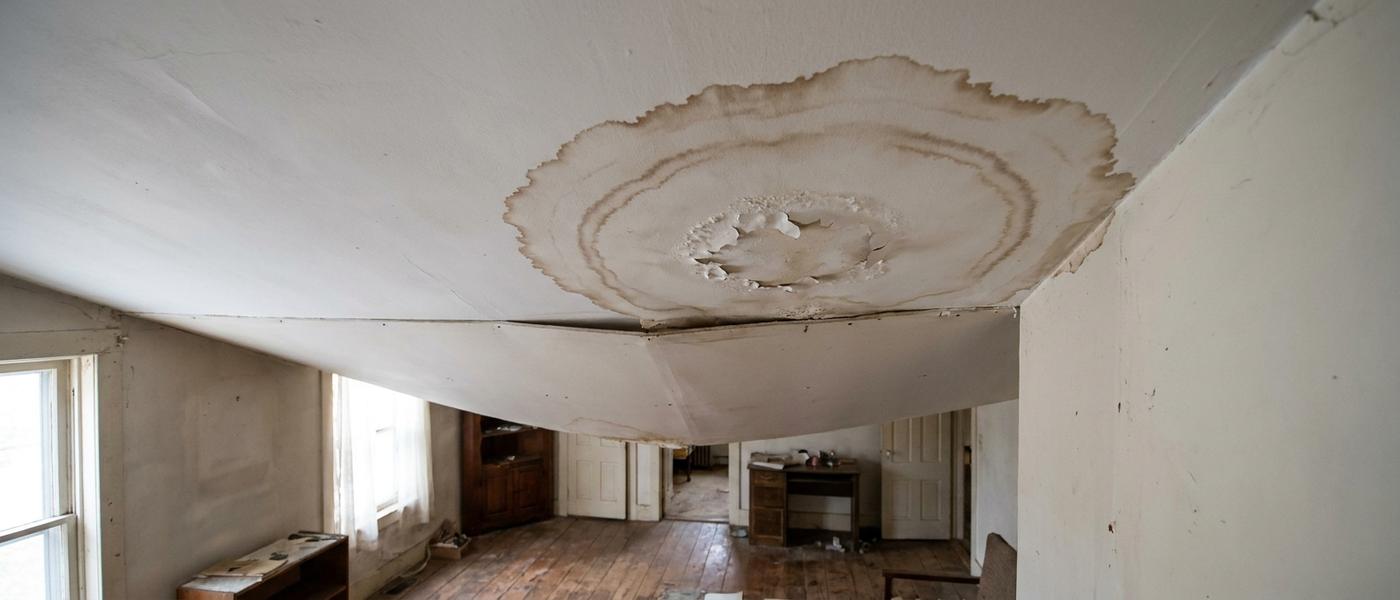
Treat a sagging ceiling as urgent, but not as a reason to panic. A sag means the drywall has taken on water and the paper facing has lost its grip, or the fasteners have pulled through. A saturated half-sheet of ceiling drywall is heavy and it can come down as one piece. Keep people and furniture out from under it, stop the water if you can find it, and get it looked at rather than poked at.
Should I just paint over a ceiling stain?
Only after the water is stopped and the board is dry, and even then only with a stain-blocking primer, because tannins bleed straight through ordinary paint and the ring reappears within weeks. The bigger issue is that paint hides the evidence without fixing the board. If the drywall behind the stain is soft, spongy or bulging, painting it just postpones the same ceiling drywall repair with a mould question added.
Can you repair just the damaged section or does the whole ceiling come down?
Almost always just the section. A competent ceiling drywall repair cuts back to the nearest joists on either side of the damage, fixes new board to solid framing, tapes the joints and re-textures the area, feathering the finish far enough out that the light does not catch a seam. A whole ceiling comes down only when the damage is genuinely widespread or the existing texture cannot be matched at all.
What are the cracks running along the edges of my ceiling?
In a Madison house, usually seasonal movement rather than structural failure. The wall-to-ceiling joint is where two planes of framing meet, and Wisconsin's humidity swing between a wet July and a dry, heated January moves them relative to each other. Rigid joint compound in that corner cracks. The durable ceiling drywall repair uses a flexible detail at that joint rather than more compound, which is why the same crack keeps coming back after a filler-and-paint fix.