Drywall Texture Matching in Madison, WI

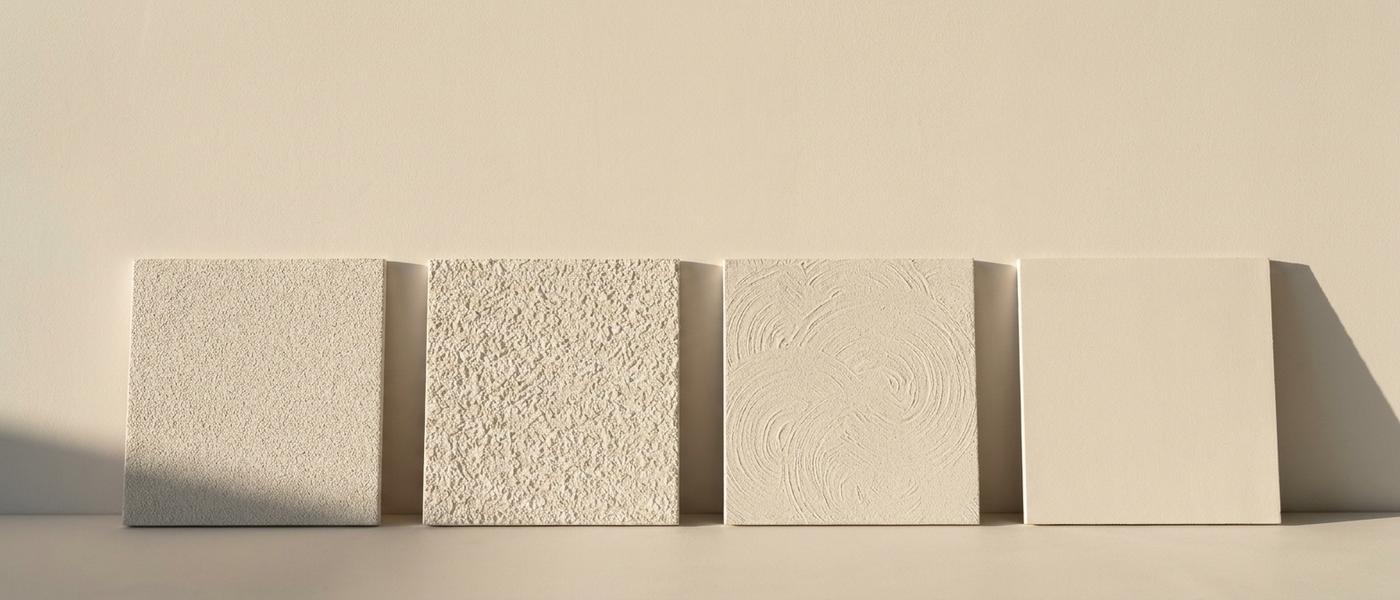
Knockdown, orange peel, stomp, popcorn and dead smooth. Matched from a sample board against your actual wall — the step that decides whether a drywall repair disappears.

Call (608) 571-1660
Free estimates · sample-matched before it touches your wall
Knockdown
Orange peel
Stomp & popcorn
Smooth finish

Drywall texture matched, not guessed

Tell us what the drywall surface looks like — bumpy, flattened bumps, swirled, or flat — and roughly when the house was built. That usually names the drywall texture before anyone is on site. Call (608) 571-1660.

  • Sample board sprayed and adjusted against the real drywall
  • Knockdown, orange peel, stomp, popcorn and smooth drywall finishes
  • Feathered well past the drywall patch so no edge shows
  • Drywall ceilings as well as walls

Drywall texture matching in Madison: the short answer

Texture matching is what separates a drywall repair from a drywall patch. The board work is the easy half of any drywall repair. Getting a sprayed drywall finish to sit at the same scale, the same density and the same relief as forty-year-old texture two feet away is the half that decides whether anyone can see the repair from the doorway. It is done with a drywall sample board: mix, spray, knock down, hold it against the wall, adjust, repeat. Only then does anything touch the drywall you actually have to live with.

Every drywall repair on this site ends with that step, because a perfectly hung, perfectly taped patch with the wrong texture on it is still a visible patch. Texture is not the decoration on top of a drywall repair. It is the drywall repair, as far as anybody standing in the room is concerned.

The drywall textures you will find in Madison houses

Naming the texture over the phone gets a drywall repair quote much closer to the real number, because the texture drives both the material and the number of return visits the drywall finish needs.

Why one Madison house can carry three different drywall textures

Additions. A 1952 Madison ranch with a 1978 family room and a 2004 kitchen extension has three eras of drywall finish under one roof, and each was applied by a different hand with a different compound. This is normal here — Madison's housing stock is spread across every decade from before 1939 to last year — and it is why the answer to “what drywall texture is your house?” is usually “which room?”

The practical consequence for a drywall repair is simple: match room by room, not house by house, and expect a separate drywall sample board for each. A finisher who mixes one batch for the whole house is guaranteeing that at least one room's drywall will not match.

The same logic applies to ceilings versus walls in the same room. Madison ceilings carry sprayed drywall texture far more often than the walls beneath them do, so a job that touches both is really two drywall texture matches, not one. Say which surfaces are damaged when you call, because that is the detail that most often moves a drywall repair quote.

Tell us what the drywall looks like

Bumpy, flattened bumps, swirled or flat — plus roughly when the house was built. That is usually enough to name the drywall texture over the phone.

(608) 571-1660

Drywall texture matching — common questions

Can any drywall texture actually be matched?

Nearly all of them, and the ones that are hard are hard for a specific reason. Knockdown, orange peel and stomp are matched by adjusting compound thinness, nozzle, air pressure and timing, and any competent finisher can get there with a sample board and a few minutes. Dead-smooth is the deceptive one: nothing to copy, and therefore nowhere for a flaw to hide. Hand-troweled and skip-troweled finishes from a specific plasterer are the genuinely difficult cases, because they carry one person's hand movement.

Why is the last patch in my house so obvious?

Usually one of three reasons. The texture was applied but not adjusted to match, so the pattern is right and the scale is wrong. Or the finish was not feathered far enough out, so there is a visible edge where new meets old. Or the patch was painted as a square instead of the wall being painted corner to corner, so it reads as a lighter rectangle in raking light. All three are avoidable, and all three are why texture matching is a real skill rather than a step.

What is popcorn ceiling and should it be removed?

Popcorn, or acoustic, ceiling is a sprayed texture common in mid-century American housing. It can be patched and matched, and it can be removed and refinished smooth. Removal is a bigger and messier job than people expect, and the one hard rule is this: in a home built before the 1980s, have the material tested before any of it is disturbed. That is a testing question for a qualified assessor, not something to take a guess at.

Do you have to texture the whole wall or just the patch?

The patch plus a generous feathered margin around it. How generous depends on the texture: a coarse knockdown hides its transition sooner than a fine orange peel does, and a smooth wall may need the whole plane skimmed because there is no pattern to break up the eye. On a ceiling, expect the texture to run further out than you would guess, because ceilings are lit at a rake by every lamp in the room.

Will the texture match if the wall has not been painted in twenty years?

The texture will. The colour will not. Twenty-year-old paint has aged, and even a perfect colour match from the original tin reads as a lighter square once it is on the wall. That is a painting question rather than a drywall repair question, and the usual answer is to paint the whole wall or the whole room rather than spot-paint the repair.
Tap to Call — (608) 571-1660