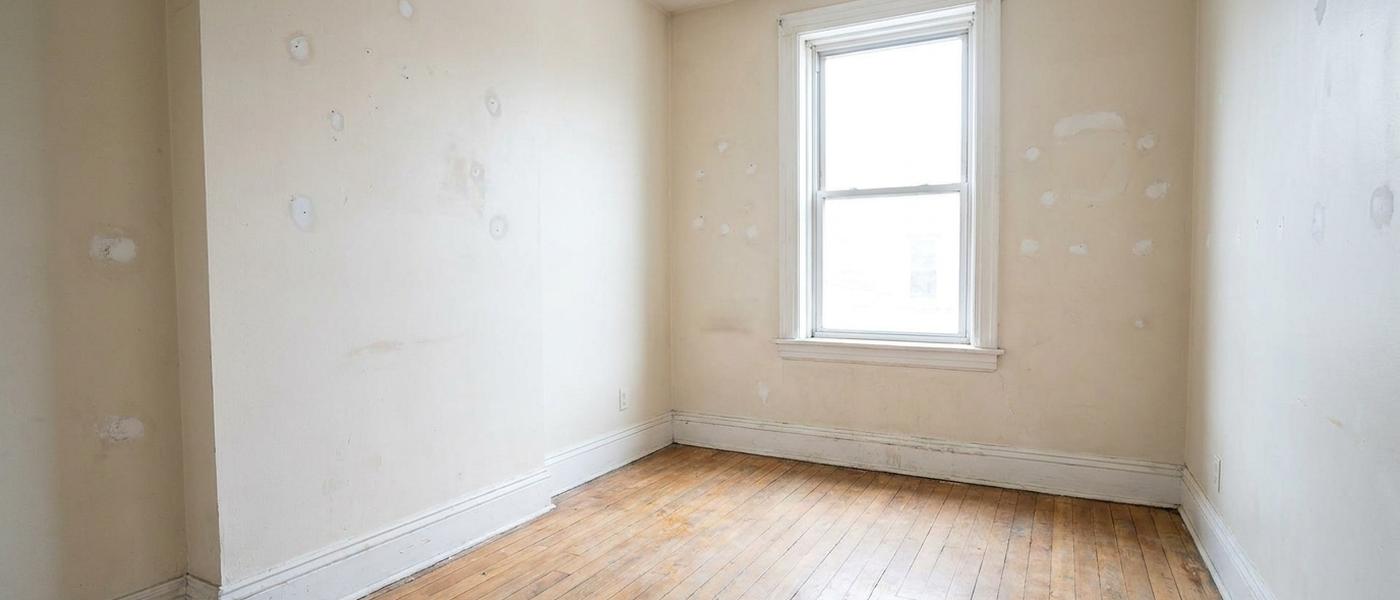
Apartment turnovers, multifamily buildings, offices and retail. Drywall repair scheduled around your tenants and your reopening date, not around ours.
Call (608) 571-1660Numbers matter here. Say how many units, what the deadline is, and whether they are empty or occupied, and the quote comes back per unit rather than per hole. Call (608) 571-1660.
Madison is a majority-renter city, and its drywall turnover work is concentrated into one week of the year. 69,252 of Madison's 128,261 occupied housing units are renter-occupied — 54.0% — and 58,203 units, 43.6% of the entire housing stock, sit in buildings of five apartments or more. That is the drywall repair market here, and it does not behave like a suburban homeowner market. It has deadlines. (ACS 2020–2024 five-year estimates, tables B25003 and B25024.)
Turnover drywall repair is also a different product from homeowner drywall repair. It is priced per unit rather than per hole, it is scheduled in blocks, and it is judged on whether the drywall is finished by a date rather than on whether it is the finest drywall work in Dane County.
Many just-off-campus Madison buildings end their leases on the afternoon of 14 August and start the new ones on the afternoon of 15 August — the flip that the University of Wisconsin's own alumni association documents as a city institution. The scale of it is visible from the kerb: City of Madison Streets Division crews collect over one million pounds of discarded material during the August move-out period, according to the division's recycling and public education coordinator. UW–Madison alone enrols more than 50,000 students.
For a landlord or property manager, that produces a specific and unforgiving problem. A year's worth of turnover drywall repair has to happen inside a window that is sometimes twenty-four hours wide, in units that were occupied until the day before, with new tenants holding signed leases for the day after.
There is only one real answer, and it is not a faster contractor. Book in June. A drywall repair needs curing time between coats no matter who is holding the trowel; that is chemistry, not scheduling. Work that goes on the calendar in June gets three proper coats and a texture match. Work that gets called in on 16 August gets one coat and a phone call next spring.
Per-unit pricing for a standard Madison turnover typically runs $250 to $700, and it drops when several units are booked as a single job — the setup, the protection and the return visits are shared across all of them. The cost guide has the full breakdown.
Offices, retail units, clinics, salons and small commercial spaces across Madison, Middleton, Fitchburg and Sun Prairie. The commercial drywall repair itself is ordinary drywall work; the constraints are what shape the job. A retail unit that cannot close, an office that can only be worked after 6pm, a clinic with a hard reopening date — say those first, because they drive the drywall plan far more than the size of the damage does.
Two things worth flagging on a commercial call: whether the wall is a rated assembly, which changes what may be put back and how, and whether there is a landlord or building manager whose approval is needed before anything is cut. Both are cheaper to establish before the first visit than after it.
Say how many, and when the deadline is. That is enough to say honestly whether the date is achievable.
(608) 571-1660June, or early July at the latest. Madison's lease calendar concentrates an enormous share of the year's turnover into a few days in the middle of August, and every drywall contractor in Dane County knows it. Units booked in June get properly finished. Units called in on 16 August get whatever is left of somebody's schedule, and the work shows it.
Sometimes for one or two small patches, but be careful what you are buying. Joint compound needs curing time between coats, and a same-day repair is a one-coat repair. In a rental that is a false economy: the patch shrinks, cracks or telegraphs within months and the same wall is on the list again next turnover. Two or three short visits across a few days is the honest version, and it is why lead time matters more than speed.
Yes, and it is most of the work in Madison's multifamily stock. Occupied-unit drywall repair means dust containment, protected floors and access routes, work timed so residents are not sealed out of a bathroom for a day, and cleaning up as you go rather than at the end. It takes longer than an empty unit and it should be quoted that way.
Typically $250 to $700 per unit in the Madison market for a standard turnover: picture-hook holes, a doorknob hole or two, some corner damage and a couple of cracked seams, filled, sanded and texture-matched. Per-unit pricing drops when several units are booked as one job, which is the norm for property managers rather than the exception.
Yes. Offices, retail units, clinics and small commercial spaces, including the after-hours and weekend scheduling that comes with them. The work is the same work; the constraints are different. Say up front what hours the space is available and whether there is a hard reopening date, because those drive the plan more than the drywall does.